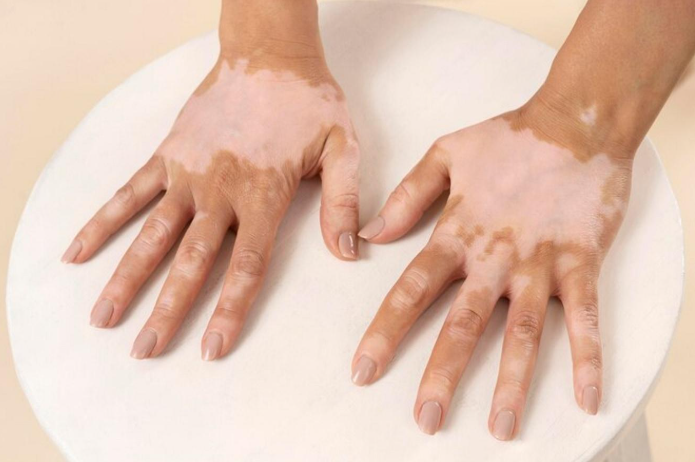
There are many reasons why patients may have vitiligo, and some may want to find out more about it as soon as they see their white patches appear. If you want to know what causes vitiligo and risk factors, here is a little information that you should know.
What Vitiligo Is and How It Develops
Vitiligo is a chronic skin disorder where your pigment cells cease to produce melanin or die. The result is light patches on your skin, hair, and sometimes inside your mouth. There can be patterns associated with vitiligo.
There can be many reasons someone may develop this skin condition. Doctors believe that it can be caused by an autoimmune disease and genetics. Some may develop vitiligo if their body attacks the pigment cells that give us our skin color.
Knowing what causes vitiligo can allow you to find answers when searching for a vitiligo cure.
Why Does Vitiligo Happen?
There are many theories as to why a person may get vitiligo. There is no one cause that covers all cases of vitiligo, but there are certain factors that could cause someone to become more susceptible to vitiligo and not others.
One theory is that vitiligo is an autoimmune disease. The body attacks its own melanocytes and causes loss of pigment in certain areas of the body. Some patients continue to develop more vitiligo patches throughout their life.
Stress can cause your skin cells to die off, which can lead to more spots appearing. This is why it’s important to manage your stress levels and see a doctor if you suspect you may have vitiligo, along with trying homeopathic remedies for vitiligo.
Genetic Influence on Risk
Yes, genetics can play a factor when it comes to getting vitiligo. Many vitiligo patients don’t have any family members who suffer from it. But some may have many family members with autoimmune diseases.
Your genes can affect how your body reacts to different stimuli and your immune system. If you are more prone to vitiligo, it can be because of these factors that were passed down to you.
- Family members can have a higher chance of losing pigment
- You can inherit genes that cause your immune system to attack your body
- People who have other autoimmune diseases are more likely to develop vitiligo
- Having a family history of vitiligo doesn’t mean you will get it
- Environmental factors and stress can trigger vitiligo
Knowing that you have a higher chance of developing vitiligo can help you avoid feeling confused or blaming yourself for having the disease. It can also help your family members identify if they have signs of vitiligo and know when to consult a professional. There are many options available for vitiligo cure in India.
What Triggers Patches to Appear?
There are many things that can trigger vitiligo, but not everyone will be triggered by these things. There are also many things that can trigger someone to get vitiligo if they are already susceptible to it. Triggering factors can vary from person to person, and sometimes it is difficult to pinpoint what is triggering your vitiligo.
Sunburn, injuring your skin, emotional stress, chemicals, and some types of illness can all be a trigger for vitiligo. You can also get patches on areas where you have continuously rubbed your skin or gotten an injury to the same spot. Usually this occurs on your hands, elbows, or around holes in your body.
- Burning your skin can harm weak melanocytes
- Constant rubbing on an area can irritate the skin
- Stress can increase the number of patches
- Exposure to chemicals can irritate your skin
- Some illnesses can cause you to develop patches
Just because something may be triggering your vitiligo doesn’t mean that you are doing something wrong. It can help you prevent your skin from being damaged and allow you to speak with your doctor about what may be causing your patches.
Autoimmune Links Patients Should Know
As vitiligo is classified as an autoimmune disorder, it has to do with the body’s immune system destroying its own cells. There are some things you may want to be tested for if you are diagnosed with vitiligo.
If you are prone to having vitiligo, you may also have a higher chance of developing autoimmune disorders such as thyroid issues, diabetes, alopecia areata, and pernicious anemia. Just because you have one does not mean you will get all of them. But it’s good to know what to look for.
Your doctor may want to test you if you have some of these symptoms. Knowing more about your body can help you take better precautions than trying to find one cure.
How Age Sex and Lifestyle Matter
Age can play a role when it comes to getting vitiligo. It can strike anyone at any time but usually happens before you reach your adult years. It all depends on each individual’s situation. Your body can be under more stress from certain situations that could trigger vitiligo to occur.
There isn’t a difference between men and women when it comes to getting vitiligo. Studies have shown that they both are equally likely to receive this disease. It just varies in how and when they show up. Some environmental factors can play a role in how people react to their vitiligo.
Your lifestyle can also play a role. Not sleeping enough can stress your body out and cause your vitiligo to act up. Smoking can also be detrimental to your vitiligo. Knowing these factors can help you choose what would be best for you when receiving treatment for your vitiligo. Maybe even homeopathic treatment for vitiligo.
What Symptoms Usually Appear First?
They can start off with light colored spots that get bigger as they progress. These will typically be more defined than your average pigmentation loss. They may appear in areas of high exposure or friction.
You may see hair fall out on those skin patches that turn white or grey. It’s also common for the insides of the mouth and around the eyes and nose to lose pigment as well.
- Light spots on hands, face, and feet
- Hair falling out that is white
- Eyes, lips, and nose losing pigment
- Definite borders on new spots
- Spots will continue to grow over time
Identifying these early on can help eliminate other reasons why you may be experiencing these. Allowing you to find ways to help control your vitiligo sooner rather than later.
When Should You Seek Medical Advice?
You should see a doctor if you have unknown white patches. It’s best to know if you have vitiligo or some other type of lack of pigment that may require further treatment.
If your white patches start to travel very rapidly or are located around your eyes/genitals.