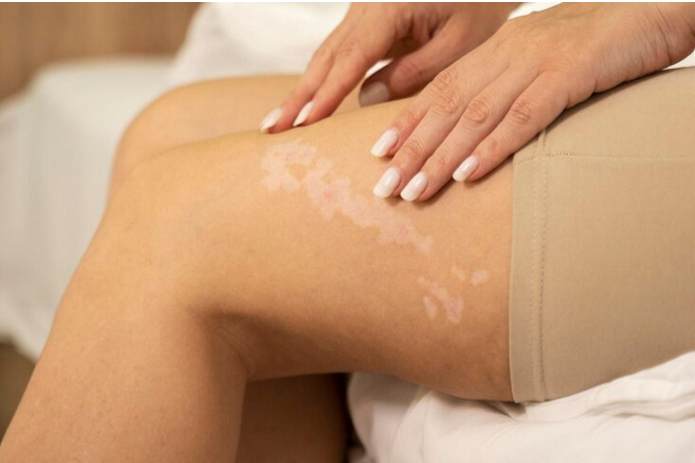
Living with visible white patches can take an emotional toll long before vitiligo affects the health of your skin. For this reason, many patients with long-term pigment loss seek out gentler alternatives to discuss with their doctors in addition to standard care. Homeopathy is one treatment approach that has continued to draw interest for vitiligo treatment.
The Basics of Chronic Vitiligo
In vitiligo, melanocytes are destroyed or stop functioning. Lesions often appear suddenly and remain stable or slowly expand over time. Since vitiligo can vary dramatically in many patients, treatment should always start with a comprehensive evaluation.
Permanent skin patches are not contagious, and they don’t indicate that your skin is unhealthy in other ways. Many people, however, choose to have white patches of skin evaluated by a skin specialist early on to understand the diagnosis and realistic treatment options.
Considering Homeopathy for Vitiligo
Homeopathic treatment is often described as personalized and noninvasive, which appeals to many patients. When dealing with a chronic condition of the skin, that message can become even more powerful if you’ve tried several treatments without the results you wanted.
Additionally, some patients prefer methods that don’t require complicated administration. Online searches for homeopathy vitiligo treatment in India are one example. Just because people want something doesn’t mean it will be effective, even for skin conditions.
Evaluating Clinical Evidence
Research into homeopathy for vitiligo is limited. Studies that do exist are often small and lack the robust design necessary to draw strong conclusions. For this reason, there is currently insufficient clinical evidence to confirm homeopathy as a means to restore pigment, slow progression, or provide any long-term benefits.
When patients ask if homeopathy could replace their usual vitiligo treatment plan, physicians can honestly respond that no, the treatment should not be started before consulting with their doctor. Relying on symptom progression, stability of lesions, and overall skin condition can help professionals decide what to recommend.
Diagnosing White Patches and Vitiligo
Correctly identifying vitiligo versus other skin concerns can allow a doctor to rule out conditions like fungal infections, post-inflammatory hypopigmentation, pityriasis alba, or chemical leukoderma. Early distinction of these lesions is key because treatment will vary based on the underlying cause. Self-diagnosing at home can delay treatment that may have been started much earlier.
- Take note of medical history. Stress, physical trauma, and family history can trigger outbreaks.
- Examine the skin to determine if patches are spreading or if they are symmetrical.
- Use Wood’s lamp to help assess depigmented skin.
- Blood work can identify if an autoimmune process is present.
- Sometimes a skin biopsy is necessary to confirm the diagnosis.
Knowing the baseline before starting treatment allows doctors to see how your skin changes with therapy. It also allows your doctor to explain if traditional medicine, lifestyle modifications, or something in between is recommended.
Potential Roles for Homeopathy
Homeopathy has the potential to be used as part of a broader treatment plan but should rarely be used as the only intervention. Patients should not forego medicines that have been proven to help restore pigmentation, aid with phototherapy, or monitor new lesions for related autoimmune disorders.
- Homeopathy can be used if patients have realistic expectations.
- Diagnosis of vitiligo should be confirmed by a doctor.
- Should not be used in place of seeing a doctor for rapidly spreading vitiligo.
- Use it as part of your treatment and track if it’s helping.
- Have your dermatologist check in on your skin after starting homeopathy treatments.
When used under the guidance of a medical professional in addition to conventional therapies, homeopathy becomes another conversation instead of an alternative to fact-based treatment. Chronic vitiligo often requires lifelong monitoring instead of treatments that provide resolution in only one visit.
Questions for Your Doctor
How will we know if treatment is working? Any treatment plan should be able to quantify how success is measured. Otherwise, patients may mistake natural variations as improvements due to treatment.
Can I continue using my current medications? As with any alternative treatment, doctors should be informed when starting homeopathy. Some patients look for vitiligo treatment in madurai and other locations because they hope to receive advice that accommodates their personal desires without sacrificing medical expertise.
Homeopathic Care and Sunscreen
There is no current lifestyle modification that can cure vitiligo. However, there are ways to reduce unnecessary irritation and improve quality of life while living with vitiligo.
Skin that is chronically exposed to the sun without protection can make it easier to notice the contrast of vitiligo patches. Preventing sun damage is simple with a few adjustments.
- Apply sunscreen (preferably broad-spectrum) to skin that will be exposed.
- Reduce skin irritation from clothes rubbing against skin.
- Prevent itching or scratching by treating eczema or dry skin flare-ups.
- Continue to see your dermatologist if new lesions are forming.
- Consider reaching out to a support group if vitiligo affects your self-confidence.
Sun avoidance matters for many of the same reasons. However, if avoiding the sun is not practical for you, protection becomes even more important. Remember that chronic management of vitiligo is a marathon and not a sprint. Even small improvements over time can lead to a big impact on your skin health.
The Bottom Line on Homeopathy Use
There is no harm in learning about homeopathy as long as patients proceed under the care of a qualified dermatologist. Gathering information can help you make an educated decision that balances medical efficacy with your personal beliefs.
Remember that homeopathy for chronic vitiligo treatment does not have scientific backing for use as a primary therapy. If you’re considering your options, start the conversation with your doctor and let them know you’re interested in complementary treatments as well. You may be surprised to learn how many options you have when you put your doctor in the loop.